Keto recipe / 001
Crispy salmon lemon-dill butter
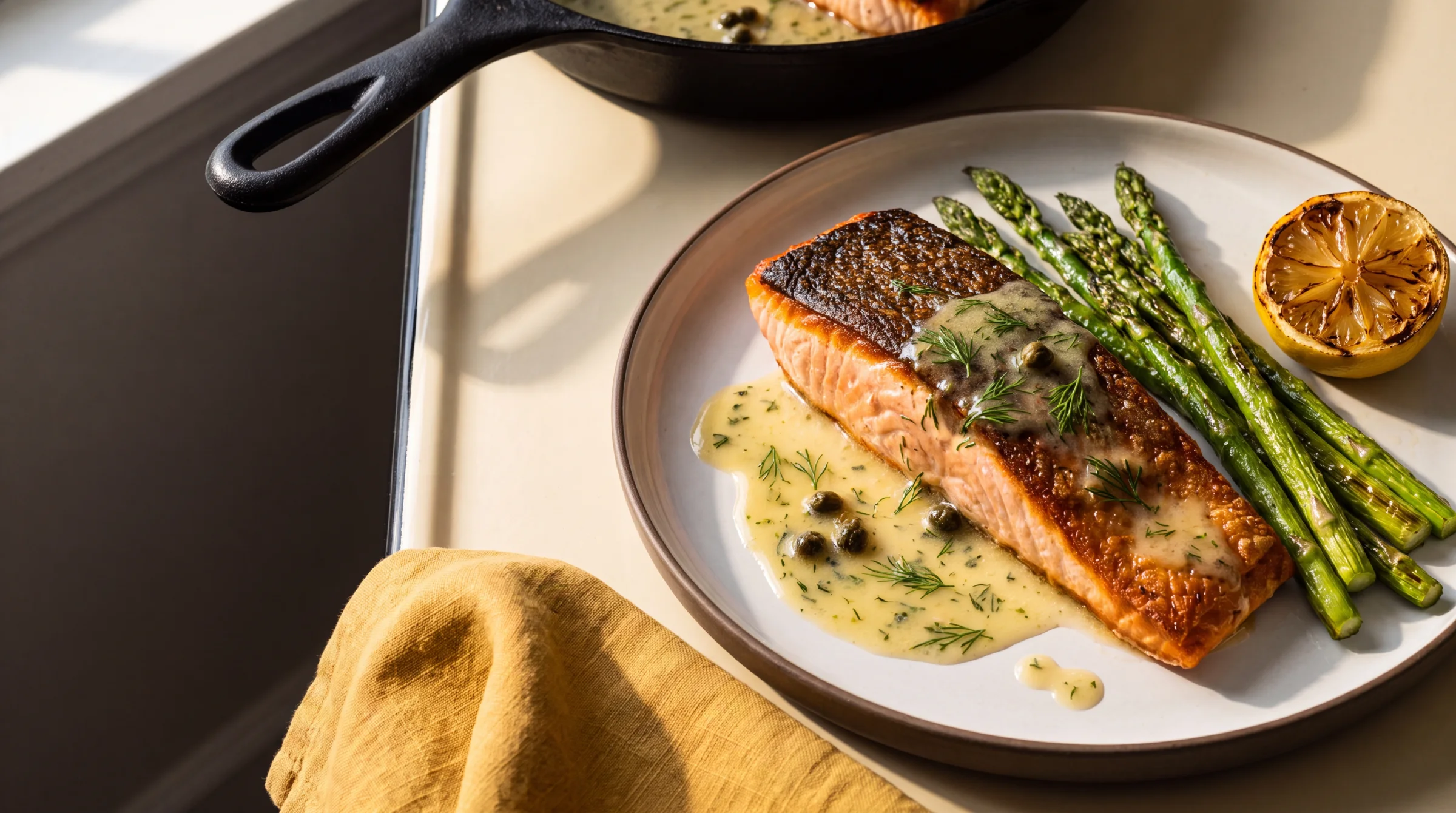
Crackling skin, a bright pan butter, and asparagus—all in one skillet. Use the ingredient calculator below to plan your portions.
Kitchen test pending. Cooking times and finished texture have not been independently tested by KetoLens. Images and videos are AI-generated illustrations, not evidence of a cooked result.
A keto dinner that earns the butter.
Prep the asparagus, garlic, capers and dill before heating the pan. The written method moves from searing the salmon to cooking the vegetables, then finishing the sauce over lower heat.
Fillet thickness and pan space affect timing. Use a thermometer for doneness and cook in batches when scaling up. Treat the times below as starting estimates while this recipe awaits kitchen testing.
Ready to prep
Ingredients
Check off ingredients as you prep. Nutrition remains per serving; cooking time does not scale proportionally.
Weight-based ingredients save in grams; lemon saves as whole fruit and salt as teaspoons. Existing generic-food entries stay separate.
One pan / five moves
The method
Read once before the pan gets hot, then use each 10-second visual cue beside the written step. From the first sizzle onward, the recipe moves quickly. For 4 or 6 servings, use a larger skillet or cook in batches, allowing extra time. The ingredient selector scales quantities; divide them using the proportions in each step.
Dry hard. Season simply.
5 minutesPat the salmon dry on every side, especially the skin. Season with two thirds of the measured salt and all the pepper. Toss the asparagus with half the olive oil and the remaining salt.
AI visual cue / step 01Build the crust.
7 minutesHeat a heavy skillet over medium-high. Add the remaining oil, then place the salmon skin-side down. Press each fillet for 20 seconds so the skin stays flat. Cook, undisturbed, until the skin is deeply crisp and the salmon is mostly opaque up the sides.
AI visual cue / step 02Flip once. Blister the greens.
5 minutesFlip the salmon and move it to one side. Add the asparagus and lemon halves, cut-side down. Cook until the asparagus is bright and blistered and the salmon reaches 145°F at its thickest point. Transfer the salmon and asparagus to a warm plate.
AI visual cue / step 03Make the pan butter.
3 minutesLower the heat. Add the butter, garlic, and capers. Swirl until foamy and fragrant, about 45 seconds. Squeeze in half of the charred lemon pieces, remove the pan from the heat, and stir in the dill.
AI visual cue / step 04Sauce, then serve.
1 minutePlate the salmon skin-side up so it stays crisp. Spoon the lemon-dill butter around and partly over the fish. Serve immediately with the asparagus and remaining charred lemon.
AI visual cue / step 05
Food-safety checkCook fin fish to 145°F at the thickest point, or until the flesh is opaque and separates easily with a fork. FoodSafety.gov temperature guidance.
Per serving
Macro ledger
Ingredient-weight estimate, not a measured finished-food analysis. Assumes all salmon, asparagus, oil, butter, herbs, capers and lemon juice are eaten and divides totals equally between two servings. Cooking losses, discarded sauce and brands change the result. Sodium is not estimated. Source and arithmetic review does not establish cooking performance.
How the estimate was built
Ingredient amounts and sources
These USDA references describe ingredients before cooking. The linked food pages are general references and can use different preparation states. Nutrition here uses the specific records below. Source snapshots accessed in July were reviewed from the saved data; other records were fetched September 5.
| Ingredient | Amount in calculation | Reference and assumption |
|---|---|---|
| skin-on Atlantic farmed salmon | 340.19 g | Fish, salmon, Atlantic, farmed, rawSource accessed 2026-07-09 12 oz total raw weight; farmed Atlantic reference. Other salmon varies. |
| asparagus | 226.8 g | Asparagus, rawSource accessed 2026-07-09 8 oz edible raw weight after trimming. |
| unsalted butter | 42.6 g | Butter, without saltSource accessed 2026-09-05 USDA reference: 14.2 g per tablespoon; unsalted butter. |
| extra-virgin olive oil | 13.5 g | Oil, olive, salad or cookingSource accessed 2026-07-09 USDA generic olive oil: 13.5 g per tablespoon. |
| lemon | 48 g | Lemon juice, rawSource accessed 2026-09-05 Assumes 48 g juice consumed from the whole lemon, including the serving garnish; peel and seeds excluded. Actual yield and consumption vary. |
| fresh dill | 3 g | Dill weed, freshSource accessed 2026-09-05 Recipe now specifies weight; no assumed conversion from chopped tablespoons. |
| capers | 8.6 g | Capers, cannedSource accessed 2026-09-05 USDA drained tablespoon reference: 8.6 g. |
| garlic | 3 g | Garlic, rawSource accessed 2026-07-09 USDA reference: 3 g per clove; actual cloves vary. |
| kosher salt | Not included in macro totals | Salt contributes sodium, which this macro calculation does not estimate. Brand-dependent teaspoon weight is not inferred. |
| black pepper | 0.57 g | Spices, pepper, blackSource accessed 2026-09-05 Uses the ground-pepper reference: 2.3 g per teaspoon; grind and packing vary. |
Changing fish species, portions, ingredients or sauce consumption changes the estimate. The recipe now specifies dill by weight. Send a correction or cooking-test notes with your quantities and method.